Grow Sunflowers in Pots: The One Mistake to Avoid (Video)
Read the full written guide: Sunflower in Pots (Surajmukhi): How to Grow It at Home →
Want to grow sunflowers in pots at home? This guide covers everything: when to sow for your city, how to plant seeds the right way, picking the right variety for your balcony, watering and feeding tips, troubleshooting yellow leaves and pests, and saving seeds from your own flower.
The biggest mistake most people make is transplanting sunflower seedlings. Learn why direct sowing into the final pot changes everything. Whether you have a sunny roof or a small east balcony, there's a sunflower for your space.
Show the full transcript
Transcript
Why do potted sunflowers fail? It's one simple mistake you can avoid.
Why do potted sunflowers fail? It's one simple mistake you can avoid.
Sunflower in Pots
Grow sunflowers in pots from seed to saved seeds, and stay for the one mistake most people make.
Hours of direct sun daily
Now, the part most people miss: these flowers are absolute sun worshippers. They need six or more hours of hard, direct sun every single day. That's not a suggestion, that's the bare minimum. Give them less and you'll get tall, thin, leaning stems with no bud in sight. Think about it, the sunflower is literally named after the sun. So find your sunniest balcony or roof spot before you even buy the seeds. Your plant's whole mood depends on it.
When to sow
Here's the thing about timing: sunflowers hate frost and they sulk in the worst of June. In the plains you get two windows, spring and late summer. A spring plant should open its flower before May turns brutal, and an autumn plant should flower before December's frost nights hit Lahore or Delhi. In Multan, you'd want to sow early because a forty-five degree week will scorch a half-grown plant.
How to sow seeds
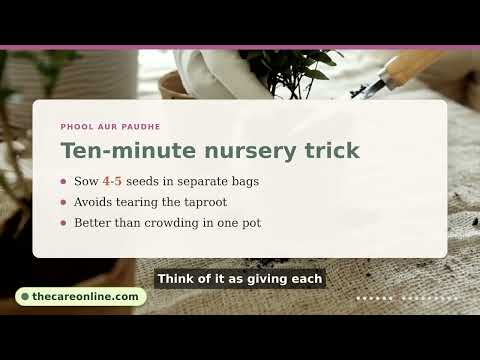
Here's where most people go wrong. Sunflowers drop a long taproot fast, and a moved seedling often stalls. So sow the seed straight into its final pot, no transplanting, no nursery trays. Push two or three seeds about two to three centimetres deep, pointed end down, a few centimetres apart. Keep the surface just moist, and seedlings usually show within a week or two in warm soil. And use fresh ornamental seed from a nursery, not roasted snack seeds, those won't sprout.
Pick dwarf for balcony
Before you buy seeds, check the packet for the word 'dwarf' or a height under about sixty centimetres. There are sunflowers that grow twelve to fourteen feet tall, imagine that in a ten-litre pot on a windy roof. It'll snap or fall over. A dwarf type in the same pot looks neat, flowers sooner, and won't give you a heart attack every time the wind picks up.
Water and feed simply
For watering, skip the timetable. Push a finger three centimetres into the mix, and only water when it feels dry, water until it runs out of the drainage hole. In hot weeks, that's daily. Feeding is simple: mix a handful of compost into the top of the pot every three weeks until the bud appears. With packaged fertiliser, go balanced early, switch to something higher in phosphorus and potassium when the bud forms. Too much nitrogen gives big leaves and a late, small flower.
Yellow leaves or no flower?
So what if things go wrong? A tall, thin, leaning plant with no bud means too little sun, move it to your sunniest spot. Lower leaves yellow? Usually overwatering or a hungry plant in a small pot, let the top dry, add compost. Leaves with holes? That's caterpillars, beetles, or snails, hand-pick them at dusk. White powder on leaves is powdery mildew, so remove the bad leaves and water the soil, not the leaves. Don't expect it to track the sun, it faces the morning sun.
Save seeds from your flower
Here's the satisfying part, saving seeds. A head lasts a week or two. When the back of the head turns yellow to brown and the petals drop, the seeds are filling. Tie a piece of old dupatta or net over the head, because parrots and sparrows will find it otherwise. Cut the head when the back is brown and the seeds come out with a thumb rub, then dry it in shade for a week. Want seeds to eat? A single pot plant gives a snack, not a harvest.
Should you grow it?
So, should you grow it? Honestly, it depends on your space. Got a sunny roof or a south-facing balcony? Go for it, it's fast, cheerful, and kids love watching it grow. Only have an east balcony with four hours of sun? Maybe, stick to dwarf types and expect smaller flowers. North balcony or completely indoors? Skip it. It'll stretch and fail to flower, and nobody wants that disappointment. And if you've got a windy high roof, definitely go dwarf, giant varieties will snap in the breeze.
Safety notes first
One more thing before you start. Tall plants on a roof edge can topple, so keep heavy pots away from parapets, especially where children play. If you spray anything beyond soap, neem, or garlic, read the label, wear gloves and a mask, and keep kids and pets off the roof until it dries. Some people get an itchy rash from the rough leaves, so gloves help when you're staking. And if you have a known seed allergy, skip eating home-saved seeds entirely.
The one mistake to avoid
So here's the one mistake that quietly kills most potted sunflowers: transplanting. Sunflowers drop a long taproot fast, and a moved seedling often stalls for weeks, sometimes forever. That's why you sow seeds straight into their final pot, right where they'll grow. If you must start them in trays, use deep paper cups and plant the whole cup within two weeks, so the roots aren't disturbed. Your sunflower will thank you with a bloom that actually shows up.
Like, subscribe and comment
Useful? Like and subscribe, and tell us in the comments what we should check next.
Read the full guide
Read the complete guide on thecareonline.com. This is general information, not medical advice.
More videos
 Flowers & Plants
How to Grow Canna: Planting Depth, Pots, Dividing and Storing
 Flowers & Plants
How to Grow Tecoma (Yellow Bells) From Cuttings, and Prune It
 Flowers & Plants
How to Grow Amaltas Tree (Golden Shower): Seed, Roots, Care
 Flowers & Plants
How to Grow Gulmohar Tree: Space, Roots, Seed and Storm Pruning
 Flowers & Plants
How to Grow Sukh Chain Tree (Pongamia): A Native Shade Pick
 Flowers & Plants