How to Grow Canna: Planting Depth, Pots, Dividing and Storing (Video)
Read the full written guide: How to Grow Canna: Planting Depth, Pots, Dividing and Storing →
How to grow canna in Pakistan. Canna lily planting depth for Lahore and Multan.
This video walks you through growing canna from rhizome to bloom in Pakistan's climate. You'll learn the right planting depth, what size pot works for balconies and small gardens, and when to divide and store rhizomes so they survive the winter. It covers the monsoon and summer heat issues that cause canna to rot or fail to flower, with practical fixes you can do at home. No fancy equipment, no expensive fertiliser, just the basics that get results.
If this is persistent or affecting your daily life, see a doctor.
Show the full transcript
Transcript
A flower that laughs at a 45°C Multan June? Yes, really.
A flower that laughs at a 45°C Multan June? Yes, really.
Canna: The Heat-Proof Flower
You're about to learn how to grow one of the toughest, most rewarding flowers for our climate. And stay with me till the end, because I'm saving the single most useful trick for last, the one thing that'll save your canna from rotting before it even sprouts.
When to Plant in Pakistan
Timing is everything, and it really depends on where you live. On the plains like Lahore or Multan, you want to get those rhizomes in the ground between February and early March, so the roots establish before the May heat hits. In the hills, you can wait till March or April. And here's a lovely surprise, Karachi is so mild that you can plant almost any month except the dead of winter. The golden rule is simple: wait till the soil has warmed up and the frost risk is gone.
How Deep and Which Way Up
Now, the part most people get wrong. A canna rhizome looks like a knobbly piece of ginger. Look closely for the pinkish or white pointed buds, those are the eyes, and they face up. The flat side with dry root scars goes down. But here's the thing: if you honestly can't tell which end is which, just lay it on its side. The shoot will find its own way up, it'll just be about a week slower. Dig a hole roughly fifteen centimetres deep, loosen the bottom, add a handful of compost, set the rhizome in, and cover it with about twelve centimetres of soil.
12 cm: The Magic Depth
Twelve centimetres. That's the magic number. That's about five inches of soil over the top of the rhizome. Not two, not twenty, twelve. Get this wrong and you'll either have the rhizome rotting on the surface or exhausting itself trying to push through too much soil. It's a small detail, but it makes all the difference between a thriving clump and a sad, mushy mess.
Pots: Size Matters
Can you grow canna in pots? Absolutely, and it does brilliantly, as long as the pot is big enough. A full-sized canna wants at least a thirty-litre pot, and one rhizome will fill the whole thing in a single season. If you've got a dwarf variety, the patio kind, you can get away with a fifteen to twenty-litre pot. For the soil mix, think roughly two parts garden soil, one part compost, and one part cocopeat or sand. It needs to be rich but loose, so the roots can breathe and spread.
Water and Food Through the Year
Canna is thirsty and hungry while it's growing. In those brutal May and June months, when it's forty to forty-five degrees, you'll be watering pots daily, sometimes even twice a day. Ground beds need a good soak every two or three days, and mulch heavily to keep the roots cool. When the monsoon hits, back off. Only water when the top few centimetres are dry, and make sure your drains are clear so the bed doesn't sit flooded for days. In winter, the plant goes almost dormant, so keep it nearly dry. And feed it monthly with compost or well-rotted manure during the growing season.
The Deadheading Trick
Here's a trick that can double your blooms. When the first flowers fade, don't reach for the pruners and chop the whole stalk down. Look just below the spent cluster, there's usually a second bud tucked away in the leaf sheath. Snip only the dead head above it. Leave the stalk alone until it has no buds left at all. Then cut it to the ground, and fresh new stalks will keep coming up from the rhizome all summer long. It's a small extra step, but it keeps the show going for months.
Why Isn't My Canna Flowering?
So what if your canna is all leaves and no flowers? Run through these in order. First, is it getting enough sun? If it's under five or six hours of direct light, you'll get gorgeous leaves and nothing else. Second, is the pot too small or the clump overcrowded? After two years, the rhizomes choke each other out, divide them. Third, is it hungry? Pale leaves and short stalks mean it needs feeding. And fourth, are you giving it too much nitrogen? Dark, huge leaves with no buds means switch to compost and a bloom feed with more phosphorus and potassium.
Dividing and Multiplying
Want more cannas? Division is the way to go. Every second year, in February or March, dig up the whole clump with a fork. Shake off the soil and look for the natural joints between sections. Break or cut so each piece has at least two eyes and some root attached. Then, and this is important, let the cut faces dry in the shade for a day so they callus over. That little drying time stops them from rotting in the ground. Seed works too, but the coat is rock hard and the seedlings vary in colour, so most gardeners just skip it.
7-10°C: Ideal Storage
Seven to ten degrees Celsius. That's the sweet spot for storing canna rhizomes over winter. Not the fridge, not a hot cupboard, a cool, dry storeroom. If you're in the hills or a frosty area, lift the rhizomes once the leaves blacken, cut the stems to about ten centimetres, let them dry in the shade for a few days without washing them, then pack them in dry cocopeat, sawdust, or newspaper in a cardboard box. That cool, dry spot will keep them happy till spring.
Pests to Watch For
Canna does have a few enemies. Leaf roller caterpillars will stick leaves shut like little tubes and chew holes in buds, just unroll them and pick the caterpillars out by hand, or spray young growth with neem. Snails and slugs come out after rain and leave ragged holes, so hand pick them at night and clear away debris. Aphids cluster on buds and leave sticky residue, a strong jet of water knocks them off, then follow up with a soap spray. And if you see pale yellow streaks and twisted leaves, that's likely canna mosaic virus. There's no fix for that one, remove the plant and bin it, never divide it.
Before You Grab a Spray
Before you reach for any chemical spray, remember this. Canna itself isn't on the usual toxic plant lists, but the sprays you use on it can be. Start with hand picking and plain soap or neem. If you ever do use a chemical insecticide, read the full label, wear gloves and a mask, and spray in the evening when the bees have gone home. And keep children and pets off the bed until it dries. If a child ever swallows a garden chemical, call poison control immediately, that's not something to wait on.
Grow It or Skip It?
So, should you grow canna? If you have a sunny bed or a large pot and you want colour in the hottest months, especially in Multan, Lahore, or Delhi where so many flowers give up, then yes, absolutely grow it. But if you've only got a shaded balcony or a small window sill, skip it. It'll just make leaves and frustrate you. Within the Phool aur Paudhe family, this is one of the easiest flowers to keep for decades, because the rhizomes simply multiply year after year. It's a plant that rewards patience and a little bit of knowledge.
The One Mistake to Avoid
And here's the one mistake I promised you at the start. After you plant your rhizome, water it deeply once. Then wait. Do not water it every day. This is the commonest way people kill cannas, they treat a sleeping rhizome like an active plant and drown it before it ever sprouts. One deep drink, then patience. The soil should stay barely moist, not soggy. Trust the rhizome to wake up on its own schedule. That single habit will save more cannas than anything else.
Like, subscribe and comment
Like, subscribe, and share your own experience in the comments below.
Read the full guide
Read the complete guide on thecareonline.com. This is general information, not medical advice.
More videos
 Flowers & Plants
How to Grow Tecoma (Yellow Bells) From Cuttings, and Prune It
 Flowers & Plants
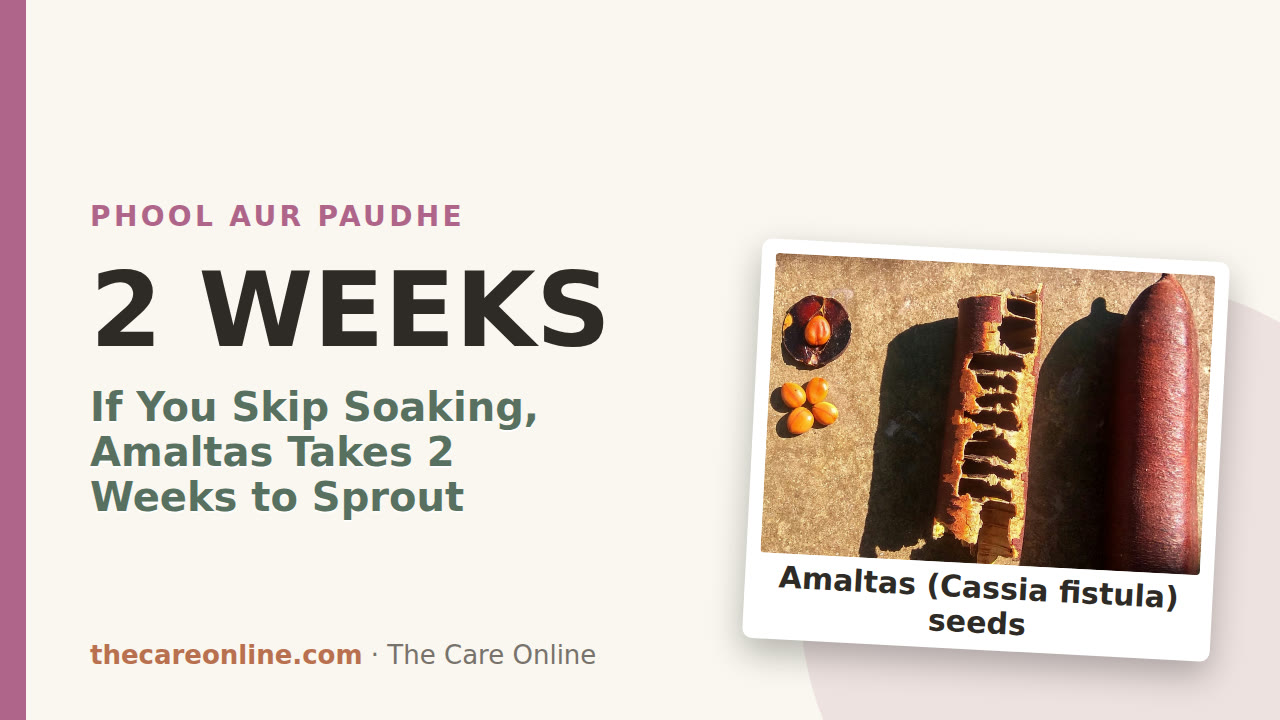
How to Grow Amaltas Tree (Golden Shower): Seed, Roots, Care
 Flowers & Plants
How to Grow Gulmohar Tree: Space, Roots, Seed and Storm Pruning
 Flowers & Plants
How to Grow Sukh Chain Tree (Pongamia): A Native Shade Pick
 Flowers & Plants
How to Grow Ashoka Tree (Polyalthia) for a Narrow Green Screen
 Flowers & Plants