Seed Balls for Trees: Do They Work, and Which Seeds Survive? (Video)
Read the full written guide: Seed Balls for Trees: Do They Work, and Which Seeds Survive? →
Seed balls sound like the perfect hack for growing trees, but do they actually work? This video breaks down the honest truth: when seed balls succeed, which seeds survive, and what works far better. You'll learn the exact recipe, the best time to throw, and the one mistake that kills most seed balls before they even sprout.
Whether you're a curious gardener or someone who wants to green up unused land, this guide gives you practical, realistic advice. We cover native seed picks like neem, sukh chain, jamun, and babool, plus safer alternatives like pit sowing and nursery saplings. Watch till the end for the one seed you should never put in a ball.
Show the full transcript
Transcript
Do seed balls actually grow trees? The honest answer surprises most people.
Do seed balls actually grow trees? The honest answer surprises most people.
Seed Balls for Trees
Stay for the one seed you should never put in a ball.
What are seed balls?
A seed ball is basically a marble-sized lump of clay, soil, and compost with a few seeds tucked inside. The clay shields the seeds from birds, ants, and the sun until rain softens it and the seed sprouts. The idea comes from Japanese farmer Masanobu Fukuoka, who championed 'do-nothing' natural farming. Seed bombing? Same thing, just lobbed from vehicles or drones.
Do they actually work?
Here's the thing: survival is low and really variable. Germination isn't the hard part, most hardy seeds sprout fine on soft, moist soil. The losses come after. A seedling has a tiny root, and if the rains pause for two weeks or it's in full sun on hard clay, it dries out. Goats and cattle eat what survives. Only a small share becomes a tree that lasts more than a year.
Seed balls vs one tree
And this is where it gets interesting. What surprised me is the comparison the post makes: one tree watered weekly through its first May and June does more than a hundred seed balls left to chance. Think about it. A hundred balls scattered on open ground, hoping for rain, dodging goats, fighting the sun, versus one little sapling you actually water. The math isn't even close. That's the kind of number that makes you rethink the whole photo-op version of seed bombing.
Pick native, hardy seeds
So if you're going to try it, which seeds actually stand a chance? Look for species that grow wild in your area, tolerate heat and drought, and sprout quickly. Native plants feed local birds and insects far better than ornamental imports. And a hard no: never use invasive plants like vilayati kikar, Parthenium, or Lantana. They already crowd out native plants across the region.
Four seeds that work
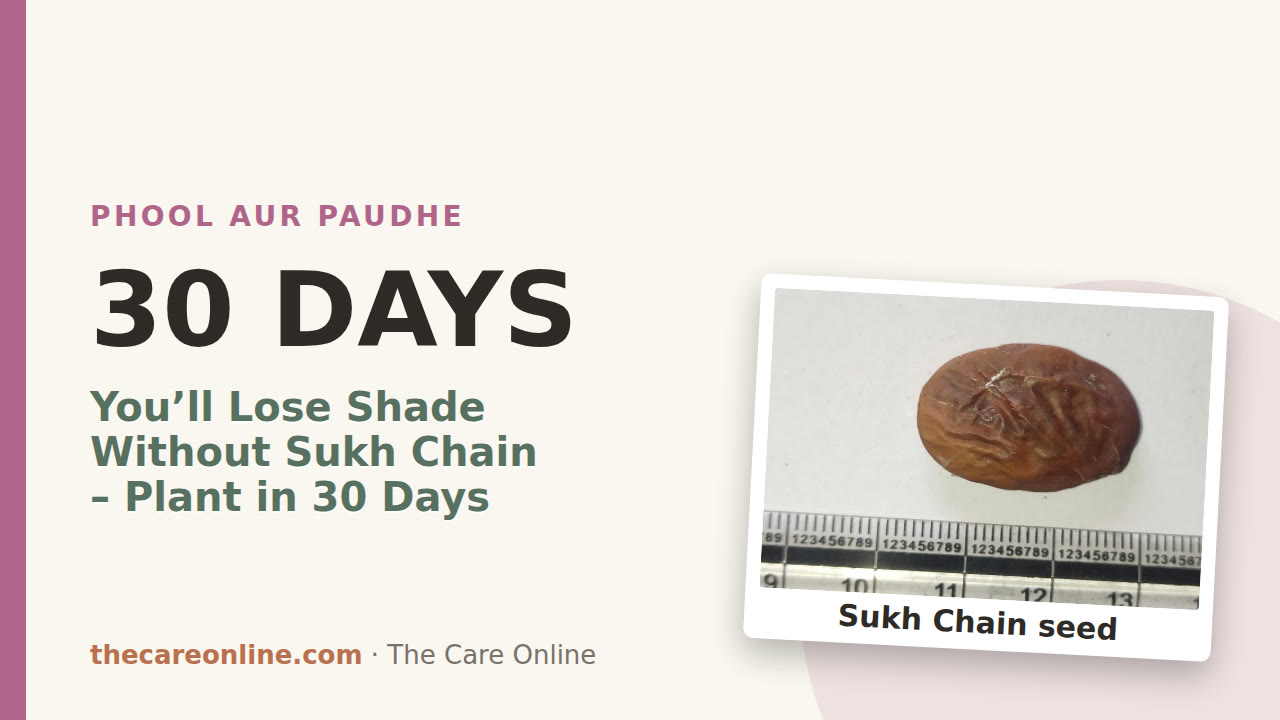
Now, the part most people miss: some seeds are just better candidates. Neem is hardy in hot plains, but you need fresh seed, it loses viability within weeks. Sukh chain, or Pongamia, has a tough seedling that tolerates poor soil. Jamun is native and feeds birds, but the seed must be fresh. And babool, or desi kikar, loves dry areas, just soak the hard seed first.
Making seed balls
Making them is simple, almost like cooking. Mix five parts sieved clay or pond silt, three parts compost or garden soil, and one part seed, by volume. For hard seeds like babool or amaltas, soak them in hot, not boiling, water overnight, or rub them on sandpaper. Then add water little by little until it feels like stiff atta dough, and roll balls about the size of a large marble. Press one to three seeds into the center of each.
The one mistake to avoid
This is the part that changes everything, and it's the mistake most people make. Don't throw in pre-monsoon heat, wait for steady rain. Aim for loose soil in dips, field edges, along fences, or low spots that collect runoff. And here's the trick: scratch the soil with a stick and press each ball halfway in. A ball sitting on hard ground in full sun has almost no chance. That one step, pressing it in, makes all the difference.
What beats seed balls
So what should you do instead? Three things genuinely work better. Pit sowing: dig a pit about thirty centimeters across, loosen the soil, add compost, and sow three to four seeds two to three centimeters deep. Nursery saplings: plant a one to two year old native sapling at the start of the monsoon and guard it from goats. And the simplest: adopt one tree and water it weekly through its first May and June. That beats a hundred seed balls left to chance.
The one seed to skip
Before you head out with your bucket of balls, one warning that's easy to miss. Some seeds are toxic if eaten, castor and kaner, which is oleander, are the big ones. Keep them out of your seed balls, and away from children. Also, only throw on land where you have permission, never on farmland, private plots, or protected areas. And if kids help make the balls, have them wash hands after handling soil and clay.
Like, subscribe and comment
Like, subscribe, and share your own experience in the comments below.
Read the full guide
Read the complete guide on thecareonline.com. This is general information, not medical advice.
More videos
 Flowers & Plants
How to Grow Canna: Planting Depth, Pots, Dividing and Storing
 Flowers & Plants
How to Grow Tecoma (Yellow Bells) From Cuttings, and Prune It
 Flowers & Plants
Lawn Grass Types in Pakistan: Korean vs Bermuda vs Dichondra
 Flowers & Plants
How to Grow Amaltas Tree (Golden Shower): Seed, Roots, Care
 Flowers & Plants
How to Grow Gulmohar Tree: Space, Roots, Seed and Storm Pruning
 Flowers & Plants