How to Grow Prickly Pear (Nagphani) in Pots Without Rotting It (Video)
Read the full written guide: How to Grow Prickly Pear (Nagphani) in Pots Without Rotting It →
Prickly pear, or nagphani, is one of the easiest plants to grow, and one of the easiest to kill. This video walks you through the gritty soil, full sun, and careful watering it needs to thrive in pots, even through a Pakistani summer. You'll also learn how to propagate it from a single pad, handle the sneaky glochids, and avoid the common mistakes that turn a healthy cactus to mush. The honest verdict: it's worth it, but only in the right spot.
This is a practical care guide, not medical advice. If you have a persistent or serious concern, please see a real doctor. For the full written post, visit our website.
Show the full transcript
Transcript
One cactus survives 45°C but dies in a wet week.
One cactus survives 45°C but dies in a wet week.
How to Grow Prickly Pear
Stay for the one place you should never grow this cactus.
Gritty soil beats fancy mix
Here's the thing: prickly pear doesn't want rich soil, it wants gritty, fast-draining stuff. A good home mix is two parts coarse river sand or crushed brick, one part ordinary garden soil, and one part compost or cocopeat. Squeeze a wet handful, it should fall apart, not hold together like a ball. And use a pot with a big drainage hole. Terracotta breathes and dries faster than plastic, which is exactly what you want. It's the difference between a kadhai that steams and one that crisps.
Survives 45°C heat
And this is where it gets interesting. This cactus shrugs off a Bahawalpur summer at forty-five degrees, as long as the soil is dry. But give it the same warmth with damp feet through a Lahore monsoon, and it turns to brown mush. So the heat isn't the enemy. The real killer is water sitting around when the plant has slowed down. Think about it: a plant built to store water doesn't need a drink just because the air feels sticky.
Full sun or floppy pads
Prickly pear wants full sun, six hours or more. On the plains, Multan, Sukkur and Bahawalpur are where it's happiest. In Karachi, the sea air is fine but monsoon humidity means extra care with watering. In Islamabad and Peshawar, grow it against a sunny wall. In the hills, most Opuntia dislike wet cold, so keep the pot under a roof edge in winter. Indoors, it etiolates, growing pale, narrow pads toward the window, so treat it as an outdoor plant. You wouldn't keep a buffalo in a flat, would you?
Water deep, then wait
Water deeply, then wait until the pot is completely dry, top to bottom. Push a wooden skewer all the way down; if it comes out with damp soil on it, wait. In spring, that's about every ten days. In summer heat, every five to seven days. Through the monsoon, only water if the pot is dry, and move it under cover in long rain. In winter, once a month or not at all. The trick is to let the soil breathe between drinks. Think of it like letting chai steep, you don't keep pouring.
Why winter and monsoon kill
Why do winter and monsoon kill, not heat? Cacti store water and slow down in cold or cloudy weather. Water sitting around still roots in a cool, humid week has nowhere to go, and fungus moves in. So in July and January, the rule flips: when in doubt, don't water. A slightly wrinkled pad in winter is normal and plumps up in spring. A soft, dark base is the warning sign. That's the heart of it: the plant isn't thirsty, it's resting.
New plant from one pad
Propagation is almost foolproof. Wear thick gloves, or hold the pad with folded newspaper or kitchen tongs. In March to June, cut or twist off a mature pad at the joint. Leave it in dry shade for a week or two until the cut end forms a hard, dry callus, this step prevents rot. Then stand it upright, cut end down, about three to five centimetres into dry gritty mix, and prop it with stones if it leans. Seeds work too, but they're slow and take years to fruit. Pads can give fruit in a couple of seasons if the plant is happy.
Why is it rotting?
Now, the part most people miss. If the base or a pad joint goes soft and brown, that's wet soil, especially in cold or monsoon weather. Cut above the rot to clean green, let it callus, and re-root. Black or brown spots spreading on pads mean fungal rot after rain, remove affected pads, improve airflow, keep dry. White cottony patches are cochineal scale or mealybug; blast them with water or wipe with soapy water. And thin, pale, stretched pads mean too little sun. Move the plant into full sun gradually. Every problem here points back to the same two things: water and light.
Handle the tiny spines safely
Besides the obvious spines, Opuntia has glochids: tufts of tiny barbed hairs in the dots on the skin. They detach on contact and lodge in your skin. Pick fruit with tongs, never bare hands. Roll each fruit firmly in a tray of dry sand, or on grass, to scour them off. Or hold it on a fork over a gas flame for a few seconds to singe them. Rinse well, then peel thickly with knife and fork. Young pads are scraped with a knife and the edges trimmed. Ripe fruit can be eaten raw or made into jam, and young pads cook like bhindi. If any get in your eye, don't rub, rinse and see a doctor.
Don't dump cut pads
Some Opuntia species spread aggressively in dry rangeland, and broken pads root wherever they land. So grow it in a pot or a contained bed, never throw cut pads onto empty land, and bin pruned pieces rather than dumping them. It's a lovely plant, but it doesn't know when to stop. A little care here keeps it from becoming someone else's problem. And if you have kids or pets brushing past, keep pots away from paths and play areas, those glochids are no joke.
The one place to skip
So should you grow it? It depends. Grow it on a sunny roof in Multan, Bahawalpur, Lahore or Delhi, in a gritty pot, if you want a tough plant that may even fruit. It's the least thirsty plant in Phool aur Paudhe. But skip it where children play close, in a shaded flat, or as a hedge beside open land. That's the one place you should never grow it: anywhere the tiny spines can reach curious eyes or paws. Choose the right spot, and it's the easiest plant you own.
Like, subscribe and comment
If this helped, a like and a subscribe really help. Drop your question in the comments.
Read the full guide
Read the complete guide on thecareonline.com. This is general information, not medical advice.
More videos
 Flowers & Plants
How to Grow Canna: Planting Depth, Pots, Dividing and Storing
 Flowers & Plants
How to Grow Tecoma (Yellow Bells) From Cuttings, and Prune It
 Flowers & Plants
Lawn Grass Types in Pakistan: Korean vs Bermuda vs Dichondra
 Flowers & Plants
How to Grow Amaltas Tree (Golden Shower): Seed, Roots, Care
 Flowers & Plants
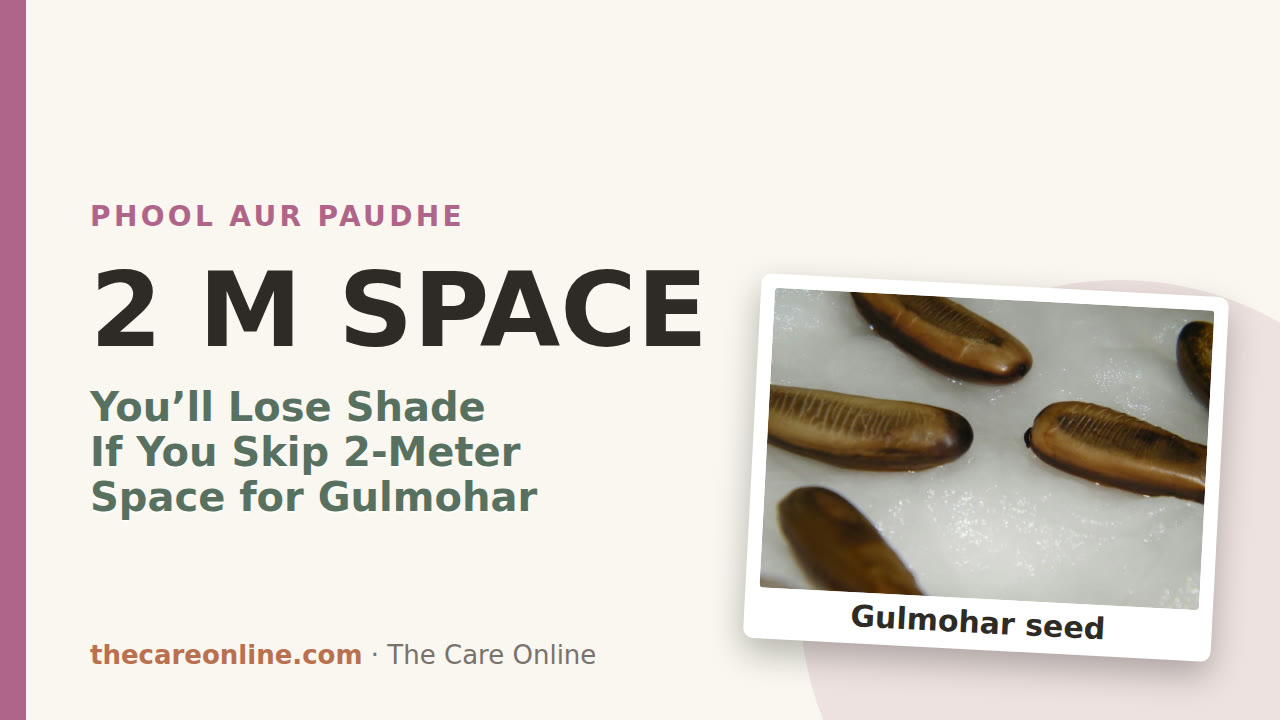
How to Grow Gulmohar Tree: Space, Roots, Seed and Storm Pruning
 Flowers & Plants