How to Grow Curtain Creeper: Cuttings, Wall Wires and Pruning (Video)
Read the full written guide: How to Grow Curtain Creeper: Cuttings, Wall Wires and Pruning →
Curtain creeper is one of the easiest ways to turn a bare wall into a lush green curtain, but most people get the support wrong. This video breaks down how to grow it from cuttings, where it thrives across Pakistan and North India, and the one pruning trick that makes your curtain noticeably thicker. You'll also learn the common mistakes: planting at the base instead of the top, using weak supports that bend under the weight, and expecting flowers that were never really the point.
Whether you're in Karachi, Lahore, Multan, or Delhi, this guide covers soil mixes, watering schedules, frost protection, and safety. Read the full post on thecareonline.com for all the details.
Show the full transcript
Transcript
Curtain creeper is easy, but the support is where it goes wrong.
Curtain creeper is easy, but the support is where it goes wrong.
How to Grow Curtain Creeper
Here's the short, honest answer, and one tip most people miss.
Where it grows best
So, curtain creeper is that gorgeous green waterfall you see tumbling over Karachi boundary walls. It's a warm-climate plant, probably from Indo-China, and it does beautifully in Delhi, Mumbai, Bangalore, and Dhaka too. In hot dry areas like Multan, it handles the heat fine as long as you mulch the roots and water deeply in June. In Lahore and Delhi, it grows fast from March to October, though a few frost nights might scorch the tips. And in Islamabad, frost can burn it back, so plant it against a south-facing wall.
6+ hours of sun daily
Here's a number worth remembering: six hours. That's the minimum direct sun this plant wants every single day. Less than that, and you'll get a thin, pale, leggy mess instead of that thick green curtain. Think about it, the same way your chai needs the right amount of milk, this plant needs its full dose of sunshine. If your wall sits in shade most of the day, honestly, pick a different plant.
Grow from cuttings
Almost every curtain creeper in a nursery started as a cutting, and that's exactly how you'll do it at home. In March through May, or in September, snip a fifteen to twenty centimetre piece from a firm stem with those small grey-green leaves, slightly woody at the base. Strip off the leaves from the lower half, and cut the base just below a leaf joint. Fill a six-inch pot with half sand and half cocopeat or old compost, push three cuttings in about a third of their length, firm the mix, and water once thoroughly. That's it. They root surprisingly easily.
Plant at top of wall
Here's a trick nurseries almost never tell you. Don't plant your curtain creeper at the base of the wall. Plant it at the top. Run two or three galvanised wires along the top of the wall, let the stems flop over, and they'll hang down like a natural green curtain. That's how those dense Karachi curtains are made. If you plant at the base, you get a bare, leggy bottom that never fills in nicely. For a low wall that needs a clipped screen instead, something like clerodendrum inerme suits better.
Best support and safety
Now, the support. Curtain creeper has no tendrils or suckers, so it scrambles and hangs, needing something solid to lean on. A mature curtain holds a surprising amount of leaf and stem, and after rain, it holds water too. Wind then pulls on that wet mass like a sail. Use three to four millimetre galvanised wire on eye bolts set into the masonry every metre or so, with turnbuckles to keep it tight. Anchor into concrete or brick, not plaster alone. Thin decorative balcony railings will bend under a full-grown curtain. And be careful on parapets: use a ladder with someone holding it, never lean over an edge alone.
Big container, rich soil
If you're planting in the ground, dig a hole about forty-five centimetres wide and deep, and mix a bucket of compost into the soil you took out. In a container, go big: a long planter box of forty litres or more, or a pot at least sixteen to eighteen inches across. Small pots dry out in hours in a Multan May. A good mix is two parts garden soil, one part compost, and one part coarse sand or cocopeat. And make sure your drainage holes are actually doing their job.
How fast it grows
How fast does it grow? Fast, from March to October. A well-fed plant in the ground can cover a stretch of wall within one to two seasons. Pot-grown plants are slower, so be patient if yours is in a container. And almost nothing happens in a Lahore or Delhi December. That pause is completely normal, so don't panic and start overwatering.
Watering through the year
For watering, give a deep soak when the top three to five centimetres of soil is dry. In June and July heat, when it hits forty-five degrees, water pots daily in the evening. In the ground, a deep soak two or three times a week is plenty. During the monsoon, let rain do the work, and check that planters drain properly. In winter, water every week or two and skip fertiliser entirely.
Why it's not flowering
Wondering why your curtain creeper isn't flowering? Here's the honest answer: it's not really a flowering plant in the garden sense. The flowers are small whitish to pinkish clusters, and many people never even notice them. If your plant is also thin and pale, the cause is usually shade, a tiny pot, or too much nitrogen fertiliser making soft leaves. Give it more sun and a bigger root run. And don't expect a bougainvillea-style show. That's just not what this plant does.
The one pruning trick
Now for the one thing that makes the biggest difference. When your curtain reaches the length you want, trim the hanging ends with clean secateurs, mostly from April to September. Here's the secret: cutting the tips makes the stems branch, and branching thickens the curtain. Every time you snip an end, two new shoots appear, and that's how you get that dense, lush green wall. A harder cut to shape the top can be done in late February, just before growth starts. Keep it off electric wires, out of gutters, and away from your neighbour's side. Dispose of trimmings away from little ones and pets.
Like, subscribe and comment
Useful? Like and subscribe, and tell us in the comments what we should check next.
Read the full guide
Read the complete guide on thecareonline.com. This is general information, not medical advice.
More videos
 Flowers & Plants
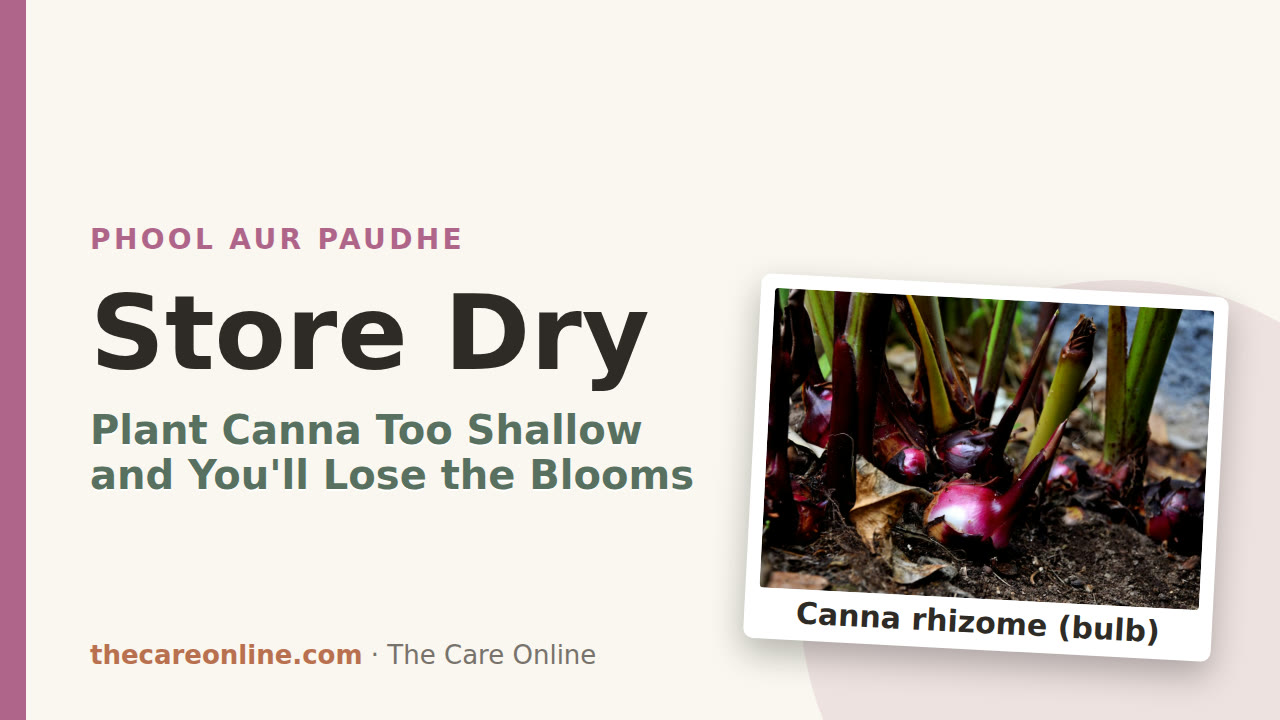
How to Grow Canna: Planting Depth, Pots, Dividing and Storing
 Flowers & Plants
How to Grow Tecoma (Yellow Bells) From Cuttings, and Prune It
 Flowers & Plants
Lawn Grass Types in Pakistan: Korean vs Bermuda vs Dichondra
 Flowers & Plants
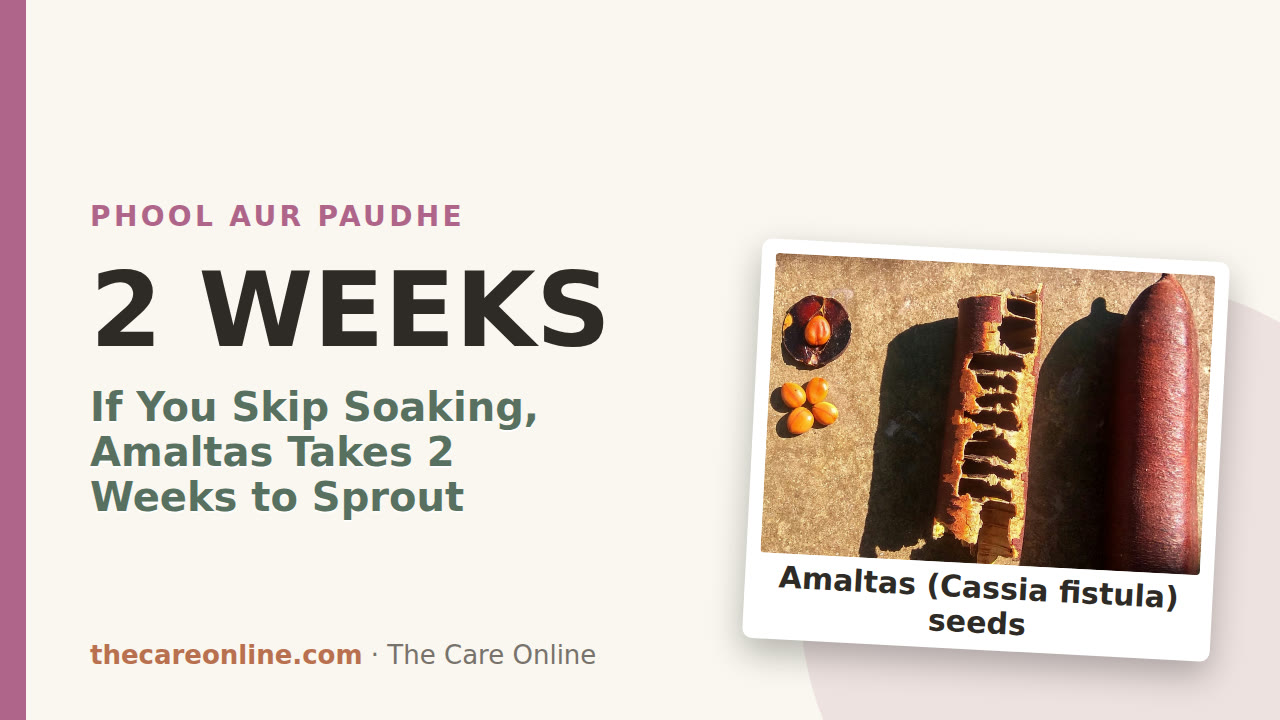
How to Grow Amaltas Tree (Golden Shower): Seed, Roots, Care
 Flowers & Plants
How to Grow Gulmohar Tree: Space, Roots, Seed and Storm Pruning
 Flowers & Plants