How to Grow Bakain Tree (Dharek): Seed, Roots and Berry Warning (Video)
Read the full written guide: How to Grow Bakain Tree (Dharek): Seed, Roots and Berry Warning →
Bakain (dharek, Persian lilac, chinaberry) is the easiest shade tree you'll ever grow, but it comes with serious warnings. This video covers how to tell it apart from neem, how to grow it from seed, where to plant it, and how fast it grows. You'll also learn the critical safety rules about its poisonous berries.
We walk through practical tips: the best planting times, first-two-years care, how far to keep it from walls and pipes, and how to stop it from spreading everywhere. The most important part is the poison warning, so please watch to the end before planting this tree near children or pets.
Show the full transcript
Transcript
Ever heard of bakain? It's the fastest shade tree, but the berries are toxic.
Ever heard of bakain? It's the fastest shade tree, but the berries are toxic.
Bakain: The Easy Shade Tree
Stay for the one mistake that sends kids to the ER.
Bakain or Neem?
Here's the thing: people grab bakain leaves thinking they're neem, and that's a real problem. Neem is used at home all the time, but bakain is not neem. Look at the leaves, bakain's are twice divided, neem's once. Flowers differ too: lilac with purple centre versus small and white. If you're not sure, don't use it.
Where Bakain Thrives
Bakain is not fussy, and that's the beauty of it. In the Punjab plains, Lahore, Faisalabad, Delhi, it just takes off. In Islamabad and Peshawar, it handles winter cold. Even in Multan's heat, it stays tough with some water. But wherever it grows, those fallen berries can reach kids and pets, so think carefully.
Grow From Seed Easily
Growing bakain from seed is almost embarrassingly easy. In winter, collect fully ripe, wrinkled yellow berries, wear gloves and wash your hands after. Soak them for a day or two, then rub off the pulp to get the hard stones. In February or March, sow each stone about two centimetres deep in soil, sand and compost. Keep moist in the sun, and you might get several seedlings from one stone.
Stop It Spreading Everywhere
And this is where it gets interesting. Bakain doesn't just stay where you plant it, birds eat those berries and scatter the seeds everywhere. Before you know it, you've got seedlings in flower beds, drains, even the neighbour's plot. The fix is simple: every winter, sweep up fallen fruit and pull every seedling while it's still small. Neglect it, and one tree becomes a thicket.
Keep It Away From Walls
Now, the part most people miss: how far should bakain be from your house? It's not a notorious foundation tree, but it's fast and fair-sized. Roots can spread up to three times the tree's height. On clay soil, give it five to six metres from the house, three metres from walls, and four or more from septic tanks. And fix leaking drains, roots love a leaky pipe.
How Tall It Gets, Fast
How fast does bakain grow? Fast. Really fast. NC State calls it a rapid grower, reaching thirty to forty feet tall and just as wide, about nine to twelve metres. In the plains, a sapling makes useful shade within a few years. It lives shorter than shisham or neem, and gets untidy with age. But for quick shade, it's hard to beat.
When to Plant
Best time to plant? February to March, before the leaves come, or July to August with the monsoon. Dig a pit about sixty centimetres wide and deep, mix the soil with a third compost, plant at bag depth, water deeply, and mulch. If you can dig a hole, you can plant a bakain. Just remember where you put it, it'll be giving you shade for years.
First Two Years Care
Care for the first two years is pretty minimal. Water twice a week in the first summer, weekly in the second, every two weeks in winter. In Multan's forty-five degree spells, add an extra watering. Feeding: compost or well-rotted cow dung in spring is plenty. In late winter, keep one main stem and lift the crown. Don't panic if young ones lose leaves in frost, that's normal.
Pests? Few, Really
Pests? There aren't many serious ones. Caterpillars might chew the leaves in summer, but a young tree recovers on its own. Black sooty film means sap-sucking insects; hose them off on young trees. Large trees can drop branches in storms, so remove weak limbs early. That's honestly about it, a low-maintenance tree, which is exactly why people love it.
The One Berry to Keep Away
Now, the one thing I promised you. Every part of bakain is poisonous if chewed or swallowed, and those round, yellow berries are the most dangerous. Small amounts cause vomiting and diarrhoea within an hour; larger amounts can cause weakness, seizures, and breathing trouble. Dogs and cats are at risk too. If a child eats any berries, wipe out their mouth, let them rinse and spit, and call poison control or go straight to the emergency department, don't wait.
Like, subscribe and comment
Like, subscribe, and share your own experience in the comments below.
Read the full guide
The full guide is on thecareonline.com. General information only, so check with your doctor for your own case.
More videos
 Flowers & Plants
How to Grow Canna: Planting Depth, Pots, Dividing and Storing
 Flowers & Plants
How to Grow Tecoma (Yellow Bells) From Cuttings, and Prune It
 Flowers & Plants
Lawn Grass Types in Pakistan: Korean vs Bermuda vs Dichondra
 Flowers & Plants
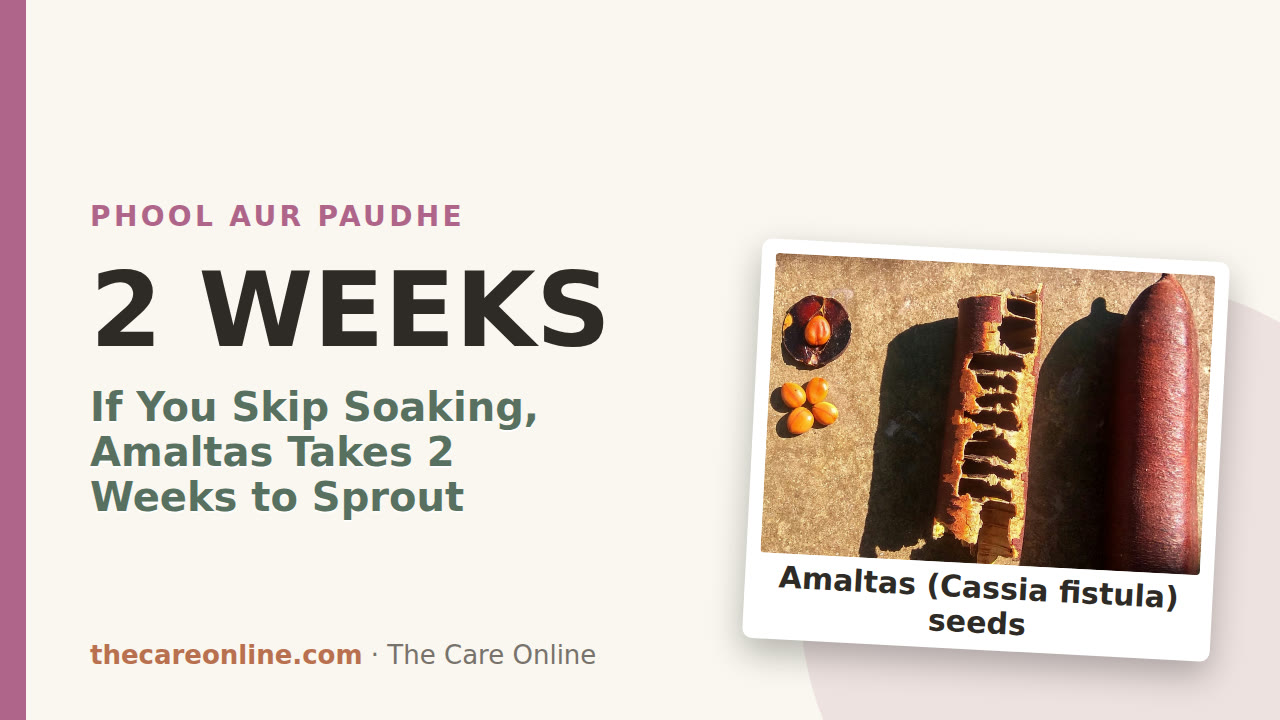
How to Grow Amaltas Tree (Golden Shower): Seed, Roots, Care
 Flowers & Plants
How to Grow Gulmohar Tree: Space, Roots, Seed and Storm Pruning
 Flowers & Plants