Does Water Before Meals Help Weight Loss? The Honest Answer (Video)
Read the full written guide: Fact or Myth: Does Drinking Water Before Meals Help Weight Loss? →
Does drinking water before meals actually help with weight loss? We look at the real trial evidence, what works, what doesn't, and the one drink swap that matters more than the water trick itself. Learn how much water you really need in Pakistan's heat, why warm lemon water is a myth, and how to tell thirst from hunger.
Practical, honest, and grounded in real studies. No gimmicks, no false promises, just the facts you can actually use. If you've ever wondered whether the grandmothers' advice holds up, this is the breakdown for you.
Show the full transcript
Transcript
Does water before meals help you lose weight? Partly, but the real win is elsewhere.
Does water before meals help you lose weight? Partly, but the real win is elsewhere.
Water Before Meals: Fact or Myth?
Stay for the one drink swap that beats the water trick.
Where the water trick began
Grandmothers said it, hakeems said it, and most weight-loss advice sheets in Pakistan still say it, because it feels obviously right. Fill some of the stomach with something free, and there's less room for roti. And that feeling isn't wrong. Stomach stretch is one of the signals that ends a meal, and water does stretch it for a while. The honest answer? A bit, briefly.
Extra loss from water preload
Here's what actually happened in the trials. In a Birmingham clinic study, 84 adults with obesity were split into two groups. One group drank 500 milliliters of water thirty minutes before each main meal. The other just imagined their stomach was full. After twelve weeks, the water group had lost about 1.2 to 1.3 kilograms more. That's real, but modest, about two and a half pounds over three months. Not magic, but not nothing either.
Second trial, older adults
And this is where it gets interesting. A second trial in the United States looked at adults aged fifty-five to seventy-five who were already on a reduced-calorie diet. Those who drank 500 milliliters before every meal lost around two kilograms more over twelve weeks. So the water seems to add on top of a proper diet, not replace it. Think about it, if you're already eating less, the water gives you a little extra push.
Water needs in Pakistan's heat
Now, the part most people miss. The six to eight glasses a day guidance is built for a temperate climate, not a May afternoon in Multan or a load-shedding night in Karachi. That heat pulls litres out of you in sweat. A sixty-five kilogram man doing ordinary work commonly needs around three litres across the day, more if he walks or works outdoors. The signal to go by is urine colour. Pale yellow is right. Dark means drink.
Daily calories saved by swaps
Here's the thing. A glass of water before dinner saves maybe forty to seventy-five calories. But a glass of water instead of a 250-milliliter cold drink saves a hundred to a hundred ten. Instead of a mug of sweet doodh patti, eighty to a hundred twenty. Do that three times a day and you've removed about three hundred calories without touching a single roti. That's a bigger change than the water trick could ever make.
Nudge versus cut
Water before a meal is a nudge. Water instead of a cold drink is a cut. That's the whole argument in one line. The nudge helps a little. The cut helps a lot more. And you can do both, starting today. You don't need to give up everything, just swap one cold drink for water, and you've already done more than the preload alone could do.
How to do it right
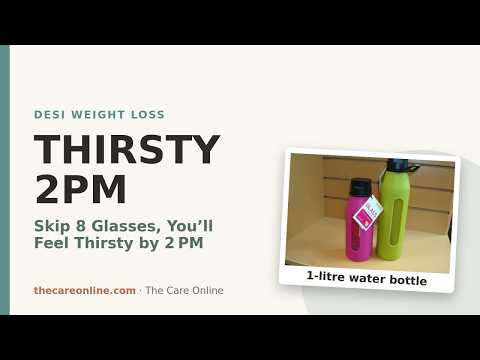
So what should you do? Drink one large glass, roughly four hundred to five hundred milliliters, about thirty minutes before lunch and dinner. Room temperature or cool, whichever you'll actually drink. Then serve smaller, take one roti less than usual and wait before the second. And keep it visible, a filled bottle by your plate removes the remembering. Simple, practical, and it works.
Warm water myth busted
Now, the myth that won't die. Warm water or lemon water works better. What surprised me is how many people still believe it. But no, it doesn't. Temperature changes nothing measurable about appetite or weight. Lemon adds flavour and a little vitamin C, not a mechanism. And warm water is simply pleasant in winter and easier on some stomachs, so drink it if you like it. Just don't add honey, because then you've added sugar to a drink whose whole point was having none.
Thirst or hunger?
Often it's thirst, not hunger, especially in this climate. The two feel similar, a hollow restlessness around four pm, and a thirsty man reaches for a samosa because the samosa is nearer than the water. But how do you know? The test is simple. Drink a glass, wait ten minutes, and ask again. If the feeling's gone, it was thirst. If it's still there and your last meal was four or five hours ago, it's hunger, and it deserves real food.
When to be careful
A quick word of caution. People with heart failure or kidney disease are sometimes given a fluid limit by their doctor, and that limit wins over any weight-loss habit. Drinking very large amounts quickly, several litres in an hour, can lower blood sodium dangerously, so spread it through the day. And if thirst won't go away, or you're passing a lot of urine and losing weight without trying, get a sugar test, not a bigger bottle.
The one swap that matters
So here's the one thing to remember. The water before meals is a nice nudge, but the real win is swapping your sweet drinks for water. Two cold drinks and three sweet chais a day is carrying hundreds of empty calories. Replace even one with water, and you've beaten what the preload could ever do. That's the cut that counts.
Like, subscribe and comment
If this helped, a like and a subscribe really help. Drop your question in the comments.
Read the full guide
Read the complete guide on thecareonline.com. This is general information, not medical advice.
More videos
 Desi Weight Loss
Can You Lose Weight Without Exercise? The Honest Maths for Dads
 Diabetes & BP
Energy Drinks Side Effects in Adults: Sleep, BP and Weight
 Fact or Myth
Does Manifesting Work? What Psychology Says About It
 Fact or Myth
: Is the Dunning Kruger Effect Real or Overrated?
 Desi Weight Loss
Fact or Myth: Do You Really Need 8 Glasses of Water a Day?
 Fact or Myth