How to Wash Fruit and Vegetables: Salt, Vinegar, or Baking Soda? (Video)
Learn the simple, everyday steps to clean fruit and vegetables safely at home. From a quick rinse under running water to optional soaking tricks, we cover what really works.
We also explain common myths, the best way to store produce, and extra care tips for raw foods. Remember, this is general advice, not medical guidance.
Show the full transcript
Transcript
Clean Fruit & Veggies
Ever wonder why your veggies still feel gritty after a quick rinse? Let’s uncover the simple, everyday tricks that really clean your fruit and veg.
Basic washing method
Running water and your hands do most of the work. A quick 30-second rinse while you rub each piece removes dirt and loose germs. Firm items like potatoes or carrots benefit from a clean brush. Leafy greens are best soaked in a bowl for a few minutes. Baking soda can help a little with surface residue, but salt and vinegar add less than people think. Never use soap, bleach, or potassium permanganate on food.
At a glance
Here’s a quick snapshot: cool running water with gentle rubbing for twenty to thirty seconds works best. Adding a teaspoon of baking soda per litre and soaking for ten to fifteen minutes gives a small extra lift. Salt water helps flush out insects from greens and cauliflower, though it doesn’t dramatically cut pesticide residues. Vinegar is optional and can leave a mild taste.
What washing removes
Rinsing under running water removes dirt, sand, insects, and loose germs on the surface. It also washes away many pesticides that sit on the skin. However, it can’t reach chemicals that have soaked into the waxy skin or been taken up into the flesh while the plant was growing. No bowl soak can pull those internal residues out.
It’s the rubbing, not the potion, that cleans your sabzi.
Basic wash steps
Wash your hands with soap for twenty seconds, then rinse well. Trim outer leaves of cabbage or lettuce and cut damaged spots. Hold each piece under cool running water and rub all over for twenty to thirty seconds. Firm produce like potatoes, carrots, cucumbers, melons, or lemons gets a quick brush with a clean vegetable brush.
Pesticide removal options
Whatever you soak, finish with a proper rinse because the soak only loosens residue. Baking soda water, mildly alkaline, can break down a few surface pesticides, but it’s not magic. A short salt-water soak helps flush insects from greens. Vinegar, mixed one part to three parts water, offers a minor benefit but may taste sour. The core work is still the rubbing and final rinse.
Read the full guide
The full post, with every detail and answers to common questions, is on thecareonline.com. It's general information, not medical advice, so check with your doctor about your own situation.
More videos
 Fruits & Vegetables
Pumpkin Flowers (Kaddu ke Phool): Pakode and Which to Pick
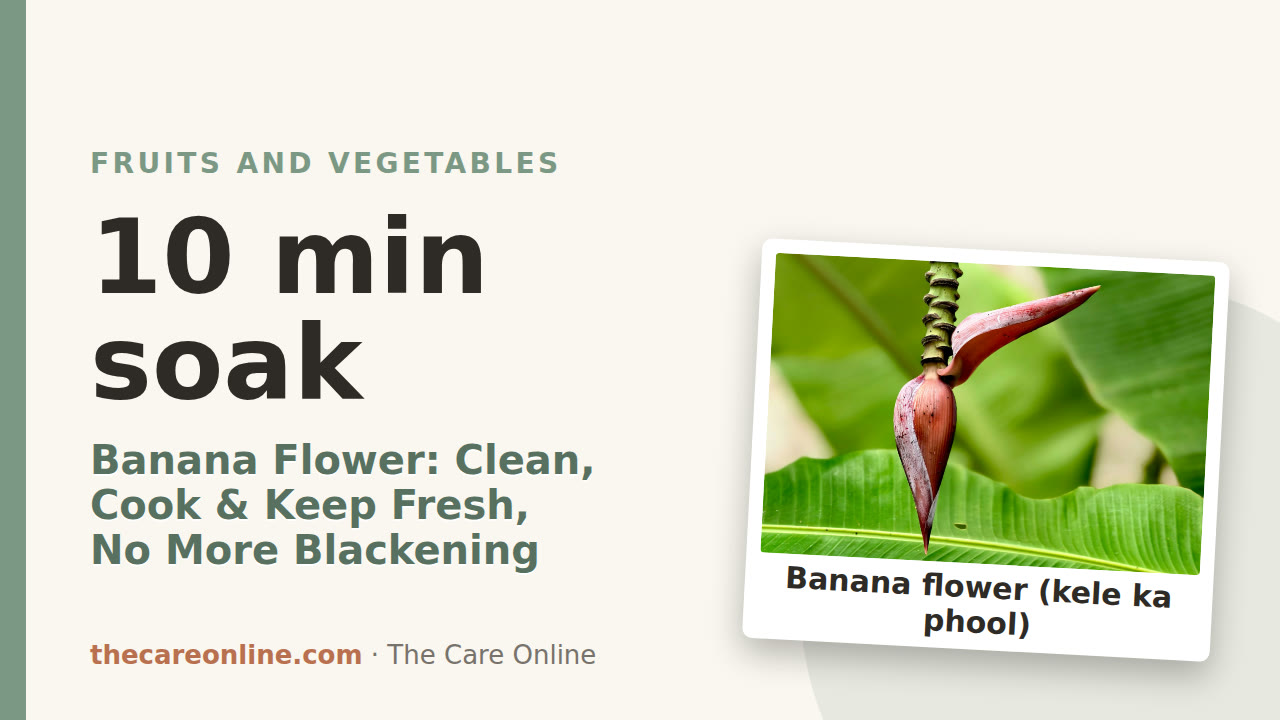 Fruits & Vegetables
Banana Flower (Kele ka Phool): How to Clean, Cut and Cook It
 Fruits & Vegetables
Cucumber Peel (Kheere Ka Chilka): Eat or Peel? Wax and Bitterness
 Fruits & Vegetables
Vitamin D From Mushrooms in the Sun: Khumbi Trick That Works
 Fruits & Vegetables
Broccoli Sulforaphane and Gobi: Chop, Wait, Add Rai (Mustard)
 Fruits & Vegetables