How to Grow Pumpkin at Home (Kaddu): Why Flowers Don’t Fruit (Video)
Read the full written guide: How to Grow Pumpkin at Home (Kaddu): Why Flowers Don’t Fruit →
how to make pumpkin fruit at home pumpkin hand pollination guide Learn the exact steps to turn your pumpkin flowers into ripe fruit, even on a balcony or rooftop. We cover seed selection, sowing, soil mix, watering, pest control, and the critical hand‑pollination timing that many gardeners miss. Follow the simple routine and watch your kaddu develop fully without waiting for insects. If this is persistent or affecting your daily life, see a doctor.
Show the full transcript
Transcript
Pumpkin flowers but no fruit, why?
Pumpkin flowers but no fruit, why?
Pumpkin at Home
Want a pumpkin that actually produces fruit at home? Most people get vines but no pumpkins, and the fix is surprisingly simple. Stay till the end and I’ll reveal the one trick that turns those pretty flowers into tasty harvests.
Sowing & planting
First, pick a sunny spot that gets six to eight hours of light, and give your pumpkin a big pot, about sixty to eighty litres, or a two-by-two-foot patch. Plant the seeds straight where they’ll grow, no transplanting. Soak them six to eight hours, then drop three seeds two to three centimetres deep, spacing them a hand-width apart. Water gently and let the soil settle.
Time to fruit
From the moment you plant the seed to the day you cut the pumpkin from the vine, expect roughly three to four months. That’s the typical window for a home-grown kaddu, assuming you’ve given it enough sun, water and a little love. The sooner you start, the sooner you’ll enjoy the harvest.
Why no fruit?
Pumpkin plants produce two kinds of blooms. The male flowers appear first on thin stalks and release pollen, while the female flowers carry a tiny round pumpkin under their petals. Without a bee to shuttle pollen, those little fruits yellow and drop within days. In city rooftops, bees are scarce, so the vines keep flowering but never set fruit.
Be the bee
Here’s where you become the pollinator. Early in the morning, when the flowers are open, pick a fresh male blossom, strip off its petals and gently rub the bright pollen onto the centre of an open female flower. One male can service two or three females. Tie a thin thread to the stem so you remember which fruit you pollinated.
Water & feed
Pumpkins are thirsty, especially in a hot March or July spell. Water the soil every morning until it drains, but avoid wetting the leaves so they dry before night. In scorching heat, give the pot a light shade cloth and mulch the surface with dry leaves or straw. At planting mix in plenty of compost, then side-dress with a handful every three weeks once the vines spread.
Pests & problems
A few pests love pumpkins. Powdery mildew shows up as white flour patches, followed by yellowing leaves, remove the worst foliage and water at the base in the morning. Fruit fly larvae make tiny holes and rot the baby fruit; a simple paper bag over each pollinated pumpkin keeps them out. Red beetles chew seedlings, so hand-pick them early, and snip off any old yellow leaves to keep the vine healthy.
The one trick to fruit
And now the secret that ties everything together: hand-pollinate those female flowers as soon as they open. A quick morning rub of pollen from a male blossom onto the centre of each female will set the tiny fruit, and you’ll see the pumpkins swell and turn colour after a few weeks. That simple step is the difference between a vine of flowers and a basket of kaddu.
Like, subscribe and comment
Like, subscribe, and share your own experience in the comments below.
Read the full guide
Read the complete guide on thecareonline.com. This is general information, not medical advice.
More videos
 Kitchen Garden
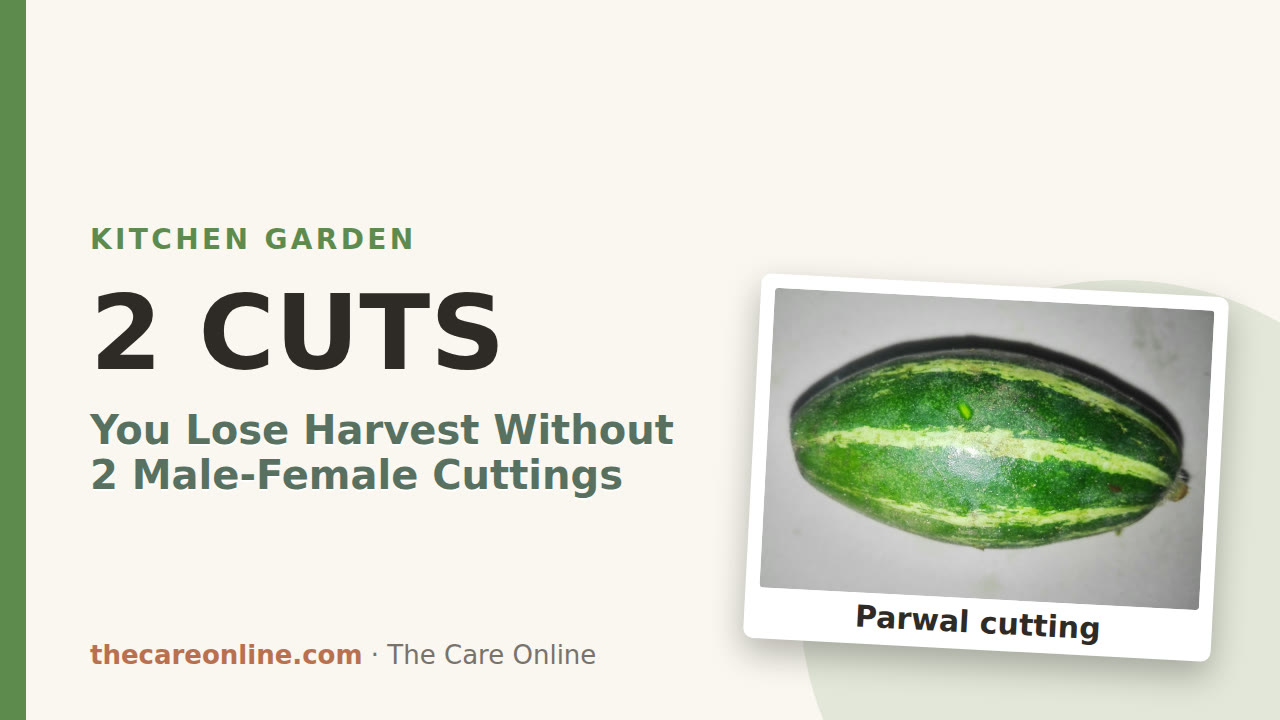
How to Grow Parwal (Pointed Gourd): Male and Female Cuttings
 Kitchen Garden
How to Grow Elephant Foot Yam (Jimikand) in a Deep Pot or Bed
 Kitchen Garden
Drip Irrigation for Pots on a Rooftop: Tank, Kit and Timer
 Kitchen Garden
How to Grow Snake Gourd (Chichinda) Straight on a Rooftop Frame
 Kitchen Garden
Shade Net for Plants: 35, 50 or 75 Percent for a Hot Summer?
 Kitchen Garden