Gut Health and Skin: What the Dahi-Lassi Connection Can and Can’t Do for Eczema, Acne, and Rashes (Video)
dahi for eczema acne lassi for skin rash what foods trigger eczema and acne
Wondering if dahi and lassi can actually help your eczema, acne, or rashes? This video breaks down the honest science of the gut-skin connection: what works, what doesn't, and how to use traditional dahi and lassi without making things worse. We look at what studies actually say about probiotics, fermented dairy, and skin inflammation — and why some people see benefits while others see breakouts. We also name three common foods that are more likely to worsen eczema and acne than dahi, so you know what to watch for. If you're dealing with stubborn skin issues, understanding the gut-skin link can help you make smarter daily choices. This is not medical advice — just honest, practical information. If this is persistent or affecting your daily life, see a doctor.
Show the full transcript
Transcript
Dahi for your skin? The honest answer surprises most people.
Dahi for your skin? The honest answer surprises most people.
Gut health and skin
Stay for the one timing rule that keeps your gut fix safe.
Your gut talks to your skin
Your gut and skin are linked through your microbiome. When that balance shifts, it triggers inflammation that can show up on your skin.
Fresh dahi beats store-bought
Fresh dahi and lassi carry probiotics, live bacteria that support gut balance. What surprised me: homemade dahi usually beats store-bought, since commercial yogurt often gets pasteurized after fermentation.
Achaar isn't a probiotic
Don't reach for achaar as your probiotic hero. It's fermented, but loaded with salt and oil. Instead, dal and fiber-rich lentils feed the good bacteria.
Daily dahi, start small
Start small: have a bowl of fresh homemade dahi or a glass of lassi daily, ideally with a meal. Nothing fancy, just consistent, part of your regular roti-dal routine.
Right portions for everyone
Portions matter. For children over one year, a few tablespoons of dahi is plenty. Adults can aim for half a cup to a full cup. More isn't automatically better.
Fiber feeds the good guys
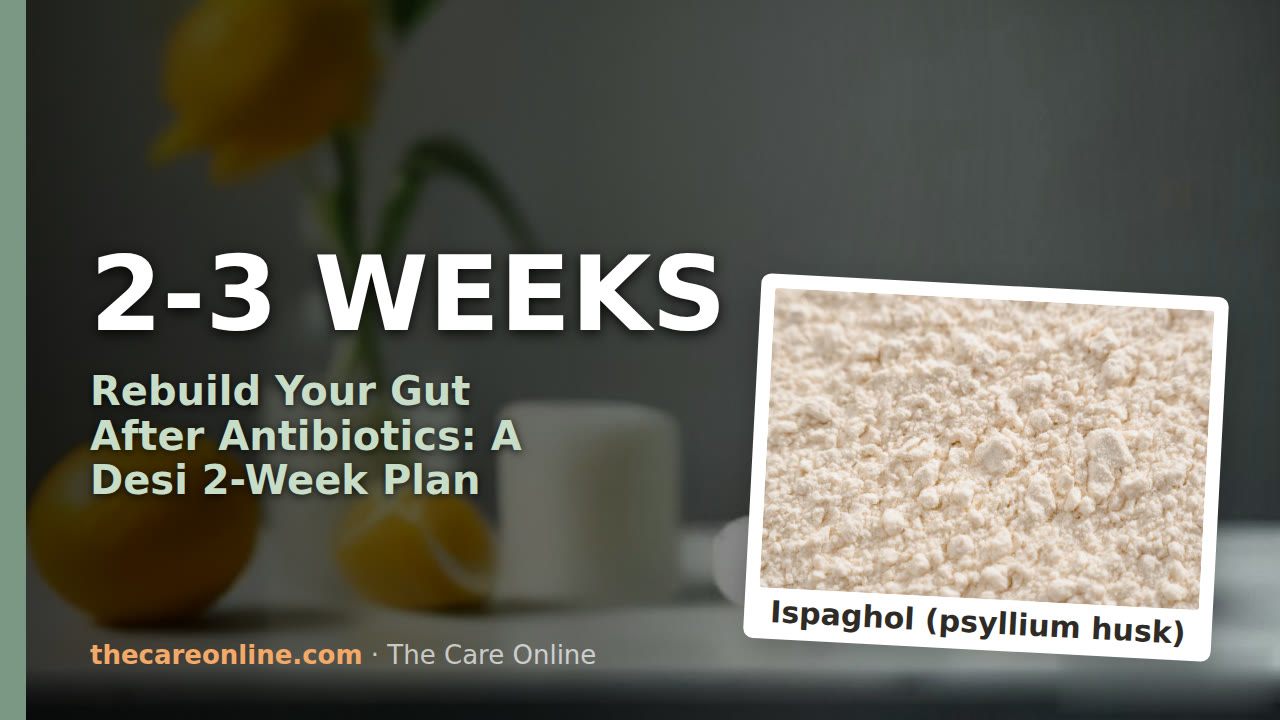
Pair dahi with fiber: dal, whole grains, vegetables, try to include fiber at every meal. If using ispaghol, start with a teaspoon in water at night, then increase gradually.
Four to six weeks
Here's the number you need: give any change at least four to six weeks before judging results. Your gut microbiome doesn't flip overnight, it needs time to rebuild.
Mild cases may improve
People with mild eczema or occasional acne may see gradual improvement over several weeks when they combine probiotics with a fiber-rich diet. Regularity can also help reduce dullness.
Not a cure, but helps
But here's the honest truth: this is not a cure. Eczema, acne, and rashes have multiple causes: hormones, genetics, allergens, stress. Gut changes help some people, not everyone.
Check with your doctor first
If you have a compromised immune system, take immunosuppressants, or have severe gut conditions, talk to a doctor before adding probiotics. Bloating or cramping? Reduce or stop.
The one timing rule
Here's the one thing to remember: take ispaghol two hours apart from any medicine, it can interfere with absorption. And if a rash or flare is severe, spreading, or comes with fever, see a dermatologist.
Like, subscribe and comment
Useful? Like and subscribe, and tell us in the comments what we should check next.
Read the full guide
The full guide is on thecareonline.com. General information only, so check with your doctor for your own case.
More videos
 Gut Health: Probiotics & Prebiotics
Antibiotics and Your Child’s Tummy: Can Probiotics Really Help?
 Gut Health: Probiotics & Prebiotics
The Antibiotic Reset: A Week-by-Week Guide to Rebuilding Your Gut (Desi Edition)
 Gut Health: Probiotics & Prebiotics
Probiotics With Antibiotics: Timing, Strains, and What Actually Works
 Gut Health: Probiotics & Prebiotics
Acidity and reflux: what your gut bacteria have to do with it (and what actually helps)
 Gut Health: Probiotics & Prebiotics
Probiotics and Gas: How to Start Without Making It Worse (A Desi Guide)
 Gut Health: Probiotics & Prebiotics